Dove and Beautifully Real Moms
Develop your understanding of how brands use values and ideologies to appeal to their target audience.
Introduction
Mass culture, especially advertising, often frames women’s bodies as flawed and then companies involved in the beauty industry promise lotions and serums to fix their problems. Dove’s Campaign for Real Beauty (2004) challenged the conventions by embracing all the wrinkles, scars, cellulite and body types of real women to sell their products. Their body positivity message resonated with the audience and positioned the brand to be more than just about skincare and soap.
When they launched their new line of premium baby care products in 2017, Dove used authentic images of motherhood that was consistent with their “real beauty” values. We are going to explore why Too Many Cooks appeals to the target audience by offering a representation of family life that rejects the false assumptions of the perfect mother.
Contents
Socio-cultural Context
Ogilvy, the creative agency behind the Dove campaign, surveyed millennial mums in Canada. 99% of respondents felt the pressure to be the perfect mother while 81% were questioning their ability to raise their kids.
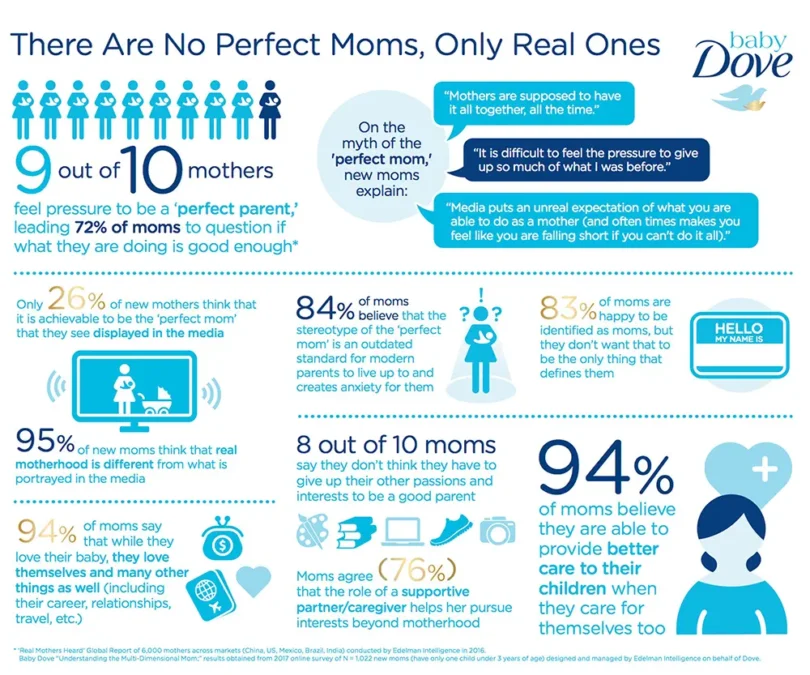
These figures are unsurprising considering the media continues to construct narrow and unrealistic representations of motherhood that leaves women feeling inadequate rather than supported.
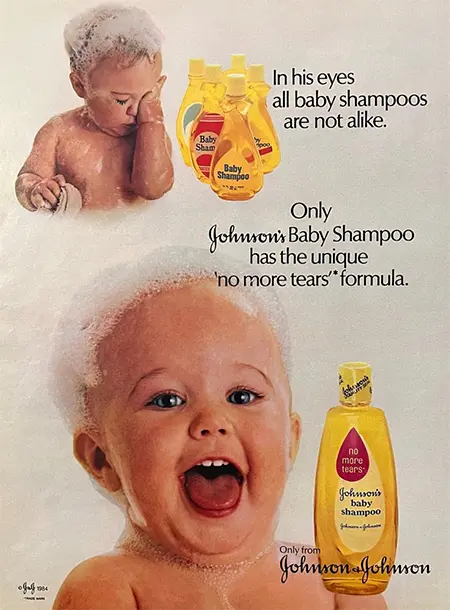
Consider the famous No More Tears slogan for baby shampoo. Crying is a normal and natural experience, but this phrase suggests the emotional response is a preventable failure and the perfect mother can eliminate the stress of bathtime by buying the product.
In the real world, bathtime is rarely as serene as this advertisement from 1984, so parents will feel guilty when their baby inevitably cries.
The Advertisement-Mother and Myth
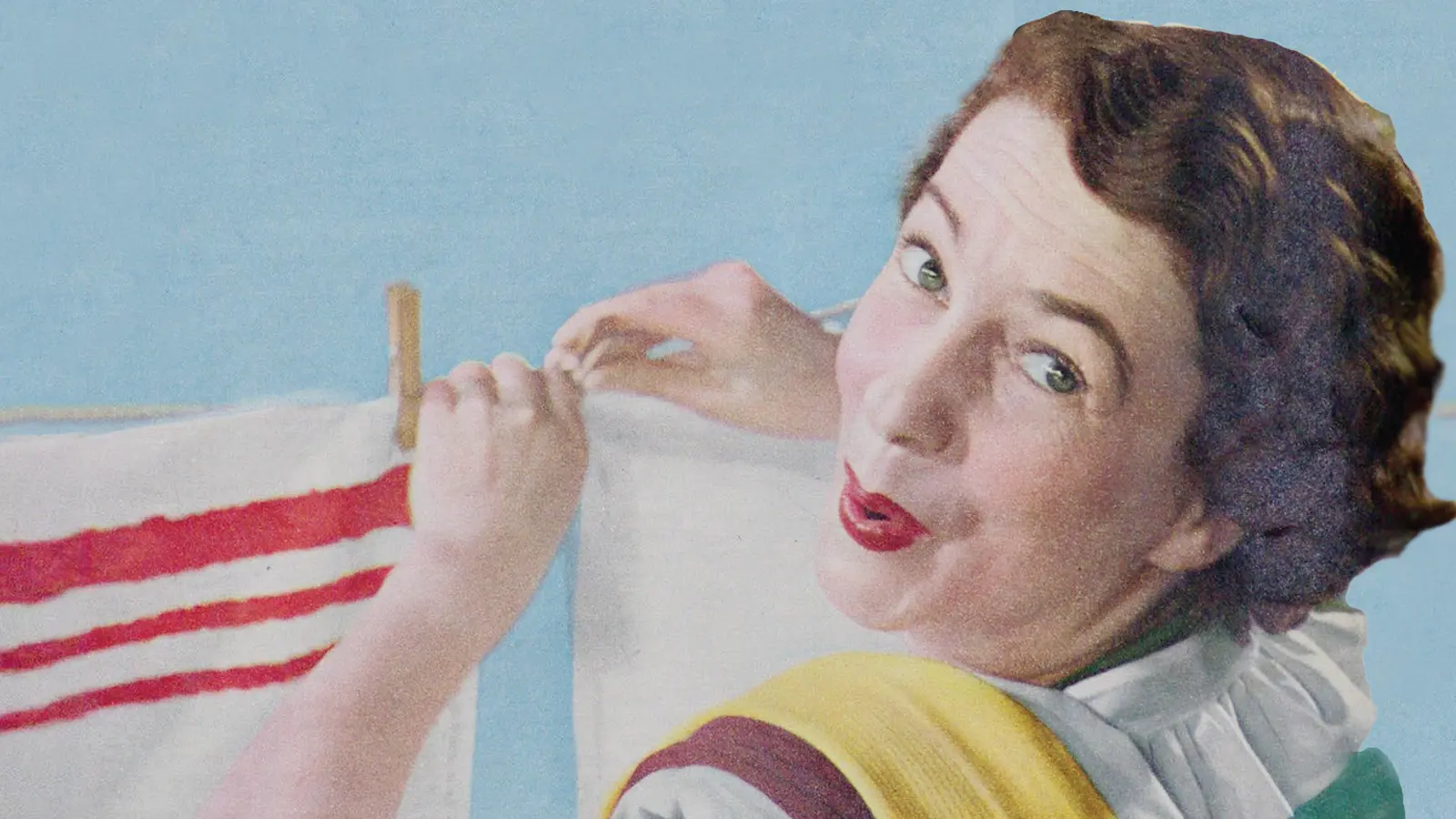
The traditional advertisement-mother is neatly dressed. Her hair is fashionable and her skin flawless. She is ageless. No grey hair or wrinkles. She is the perfect homemaker and caregiver.
However, the advertisement-mother is a media representation. She is a stereotype created to convince parents they have to buy the fragrance-free shampoo or hypoallergenic baby lotion. Instead of simply promoting a product line, the advertisement-mother is selling an aspirational family life.
Ideology refers to a pattern of attitudes and beliefs, such as the expectation placed on a mother to be perfect. Roland Barthes (1957) argued mass culture naturalised these values by making the meanings appear normal and obvious. The idealised mother is so pervasive in the media, we simply accept the representation as the unquestionable truth.
The advertisement-mother is a myth.
Of course, you could argue the representation of “beautifully real moms” is just another signification process. Is there such a thing as a “real mum”? Or is the company hiding its profit motive behind a new ideology?
Too Many Cooks
Dove wanted to celebrate the beauty of being a real mum and connect with their target audience in a way that reinforced their brand identity, so Ogilvy commissioned award-winning photojournalists to immerse themselves into the lives of six families for three days and nights to document the wonderfully imperfect and messy moments of raising children.
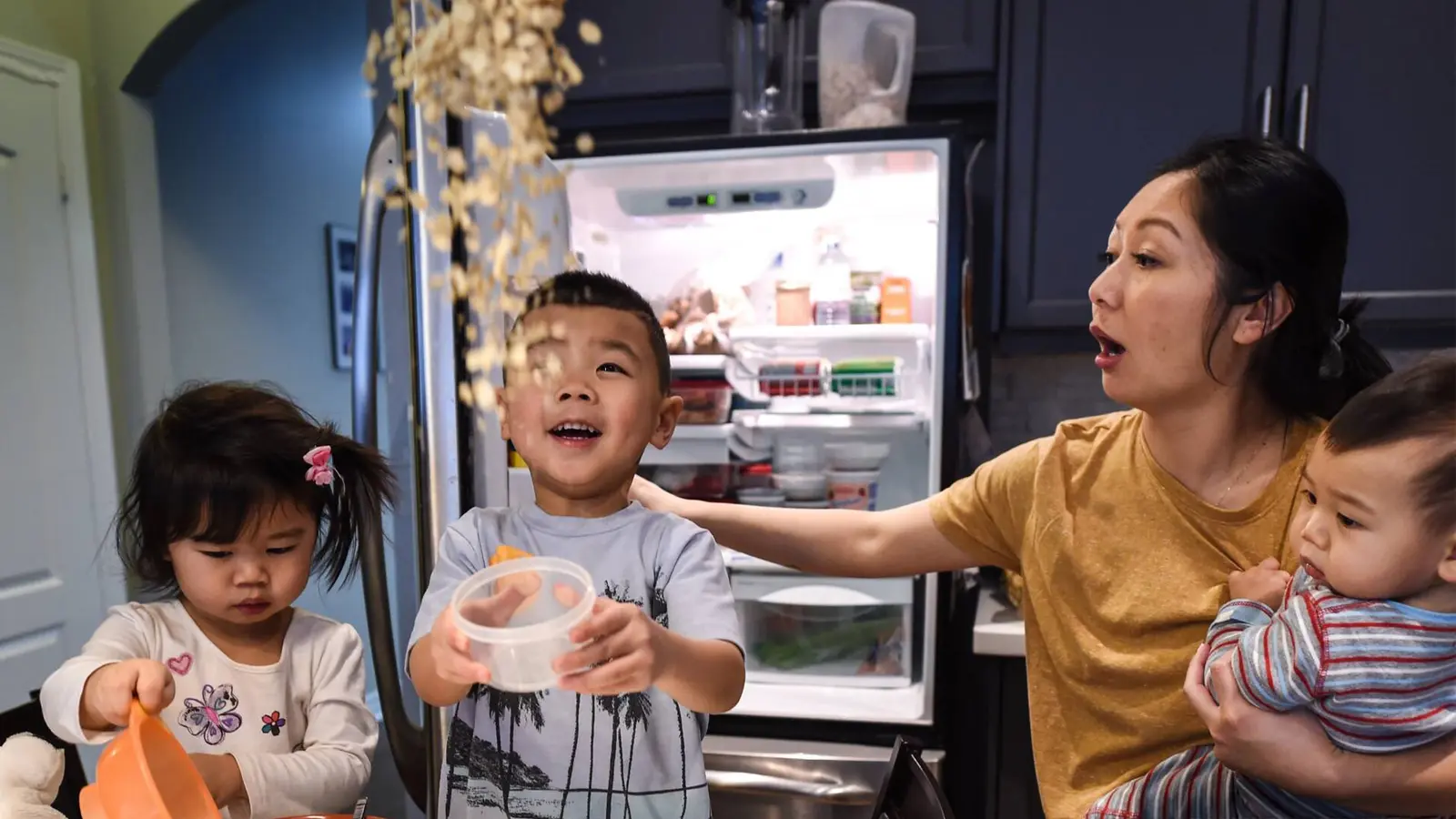
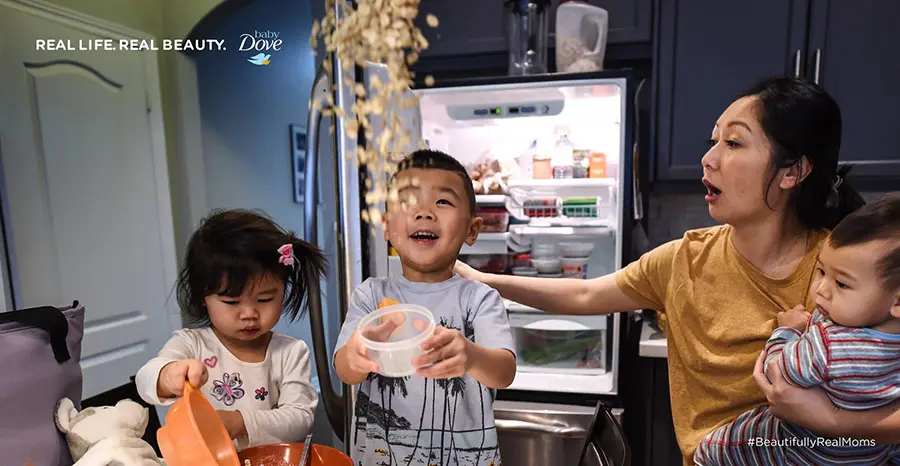
Too Many Cooks was taken by Ami Vitale, a National Geographic photographer and writer who has been publishing stories from the front lines of war, climate change and wildlife conservation. She captured the kitchen chaos when she went to Stouffville just north of Toronto to follow Grace and her three kids. Although her extended family were helping with childcare, Grace was experiencing the stresses and strains of returning to work while doing her best to keep the house in order.
Many of Ami’s photographs were uploaded to Dove’s online exhibit, Gallery of Real Moms, where other users were also being encouraged to share their images by using #BeautifullyRealMoms.
The Punctum
Our emotional reaction to a photograph is often pricked by a small detail which Roland Barthes called the punctum. Although the punctum is subjective and everyone will have their own response to the image, the open fridge feels unexpectedly important because it disrupts any hope of balance in the frame and reminds the audience that life is chaotic.
Presumably the boy has gone to the fridge and lifted the pot, but he has forgotten to close the door or abandoned the action to play with the cereal instead. Either way, the open door makes the viewer feel uncomfortable because everything is supposed to be perfect.
It is also worth noting the shelves are full and organised suggesting there is a loving and fulfilled family living in this happy home.
Advertisements arrange the elements into a sequence that can be easily read and understood by the audience. However, this photograph does not have a focal point. Some viewers will be immediately drawn to the boy tossing the cereal into the air. Others will focus on the mother’s reaction, the young girl mixing food in the bowls, or the baby watching the scene unfold. You might even spot the fridge door first because its harsh light contrasts with the softer lighting of the room. The composition of the wide shot prioritises realism and tension. How you read the photograph will depend on your own experiences, but the message is clear – raising a family is not easy or glamorous.
Stereotypes
Stereotypes are not neutral expressions. They are encoded with cultural values that influence how we define the world and our own identity. When we see the stereotype of the advertisement-mother, we judge ourselves against that impossible ideal.
The Dove campaign constructs a countertype to the perfect mother.
Grace is reaching out to her son in a futile attempt to control his behaviour. The look of horror on her face evokes sympathy from the audience rather than feelings of desire we would normally expect from an advertisement.
In terms of dress codes, the family are wearing casual outfits appropriate for messing around in the kitchen. There is nothing remarkable about the mother’s ochre-coloured top or the children’s clothes. They look normal and relatable.
Advertisements are often set in luxurious and privileged spaces, turning the product into a signifier of social status. The use of a minimalist studio might encourage the consumer to transfer their desire for a clean and orderly world to the goods and services being promoted. Too Many Cooks subverts conventions by placing the viewer in an ordinary kitchen and validates women’s experiences of raising children.
Gender and Performativity
The campaign was intended to celebrate diversity and empower all women towards self-representation. However, critics might argue many of photographs reinforce the stereotype of the mother as the primary caregiver and define the role of fathers by their absence.
Judith Butler (1999) argued gender roles were “compelling social fictions” that we are taught to believe are fixed and stable, so we continue to perform these “stylized” acts. In other words, gender is a cultural construct. The ritual depicted in Too Many Cooks is performative because it polices the ideology of women as nurturing and domestic.
Taking an oppositional gaze towards positive representations is important, but we have to appreciate the campaign is drawing attention to the demands of family life and raising the status of women who look after their children. Being natural is beautiful.
Representation and Reality
The producers wanted to offer more realistic representations of motherhood. The blurred food, Grace’s reaction, the daughter’s messy hair, and the fridge door suggest the photograph is a reflection of a profound reality. This interpretation is anchored by the slogan “Real Life. Real Beauty”.
Stuart Hall (1997) argued meanings are produced by the representation process. At first glance, the photograph seems like a faithful copy of a real family making food in the kitchen. The audience accepts the authenticity of the image because it resembles its real-life equivalent. However, the deliberate framing and selection is re-presenting the scene as a connotator of family life.
Jean Baudrillard (1991) believed it was increasingly difficult to separate real life from representation because mass media maintained an “illusion of actuality” to keep us consuming goods and services. Dove’s campaign is encouraging the target audience to reject the stereotype of the perfect mother and define their own identity. In our hyperreal world, society has been succeeded by advertising truths.
Final Thoughts
The Beautifully Real Moms campaign was an incredible success. Three months after the launch of the product line, Dove achieved a substantial 10% of the market share in Canada. The online gallery had over 140 thousand visits with lots of mums posting their own experiences.
Selling a lifestyle is clearly an effective marketing strategy. Companies also know consumers are loyal to brands rather than baby washes and moisturisers. That’s why no products feature in the advertisement.
Representation does matter. Too Many Cooks challenges the false and destructive belief that parenthood should be a blissful experience. The message reassures mothers that happiness can be found in the messy and beautifully real moments.
For another example of values-based advertising, read our guide to River Island’s Labels are for Clothes campaign. You might also be interested in our analysis of advertising grades and how sophisticated messages exploit our fears and desires to sell products.
Questions
- Explain how representations in advertising are chosen to promote the brand.
- Explain how representations in advertising can challenge stereotypes and prejudices.
- Explain how advertising reflets the recent trend of social activism.
- Explain how media language encodes values and beliefs.
- Explain how advertising relies on narratives to construct meaning.
- Explain how audiences respond to and interpret media representations in adverts.
- Explain how the combination of elements of media language influences meaning in advertising.
Bibliography
Barthes, Roland (1972): Mythologies. Trans, Annett Lavers. Jonathan Cape Ltd.
Baudrillard, Jean (1991) Simulacra and Simulation. Trans. by Glaser, S.F.
Butler, Judith (1999) Gender Trouble: Feminism and the Subversion of Identity.
Hall, Stuart (1997) Representation: Cultural Representations and Signifying Practices.