Imagined Communities
Explore how mass culture constructs and reinforces a sense of belonging, especially to national identities, with our introduction to Benedict Anderson’s theory.
Definition
The concept of an imagined community refers to a group of people who feel connected and share a strong sense of belonging even though they will never meet most other members of the group.
Mass media can help construct these imagined communities by broadcasting representations and ideas, so individuals experience a shared cultural world and begin to imagine themselves as part of a larger audience, such as a national identity.
An obvious example of the theory is the FIFA World Cup. Millions of strangers watch the broadcasts every four years, hear the anthems, see the flags and players, discuss the tactics and results, and feel a collective belonging to their national teams.
Contents
The Process
Even if you are not familiar with the beautiful game, you might be aware of Maradona’s controversial “hand of god” when he punched the ball into the net to score against England in the 1986 World Cup quarterfinals. It gave Argentina a 1-0 lead in a match they went on to win 2-1.

You might remember David Beckham being sent off for flicking his leg at Diego Simeone, in the knockout stages of the 1998 World Cup. The game ended in a draw after extra time, but Argentina won the penalty shootout 4-3 to send England home from the tournament.
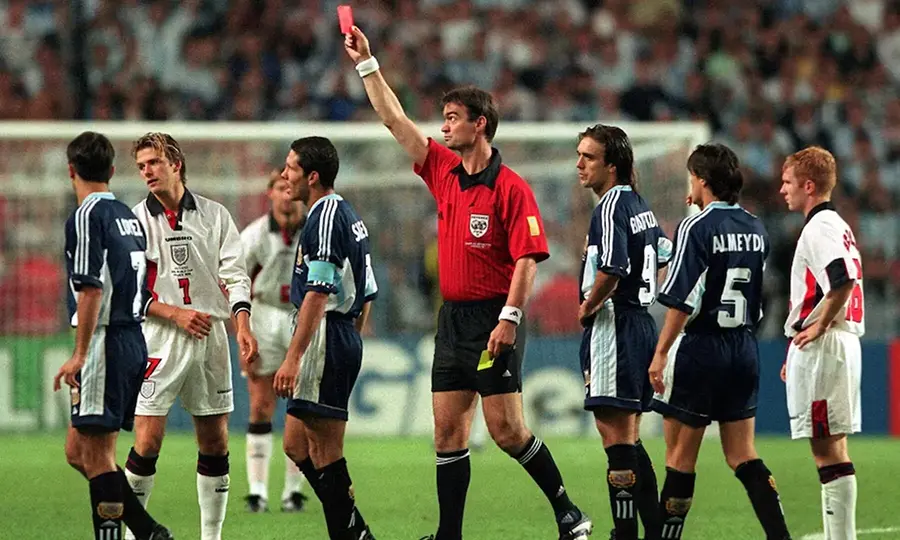
Maradona’s goal and Beckham’s infamous red card were discussed in detail by professional pundits leading up to England’s game against Argentina in the 2026 semifinal. The three events are separated by years, and all the players on the pitch had changed, but the broadcasters were deliberately positioning the audience to accept the controversies were connected to heighten the importance of the match.
This juxtaposition of independent events constructs a narrative that we quickly believe is real. An individual might dismiss the connections as pure theatre, but the broadcasters have plenty of tricks to reassure the audience that the need for revenge was rooted in everyday reality.
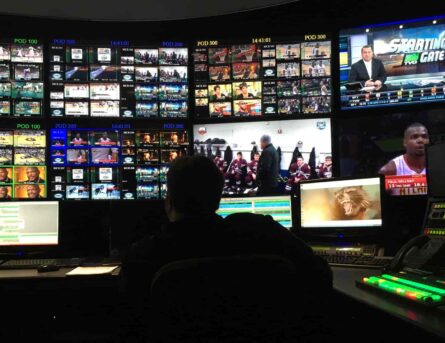
For instance, the presenters and commentators will use direct address to make sure the audience feels included. Expect to hear phrases such as “wherever you are watching” and “here we go again”. They will also look directly at the camera to invite the viewer into the space. In any of these tournaments, you just know they are going to say “the nation holds its breath” before a penalty is taken or a key decision has gone to VAR.
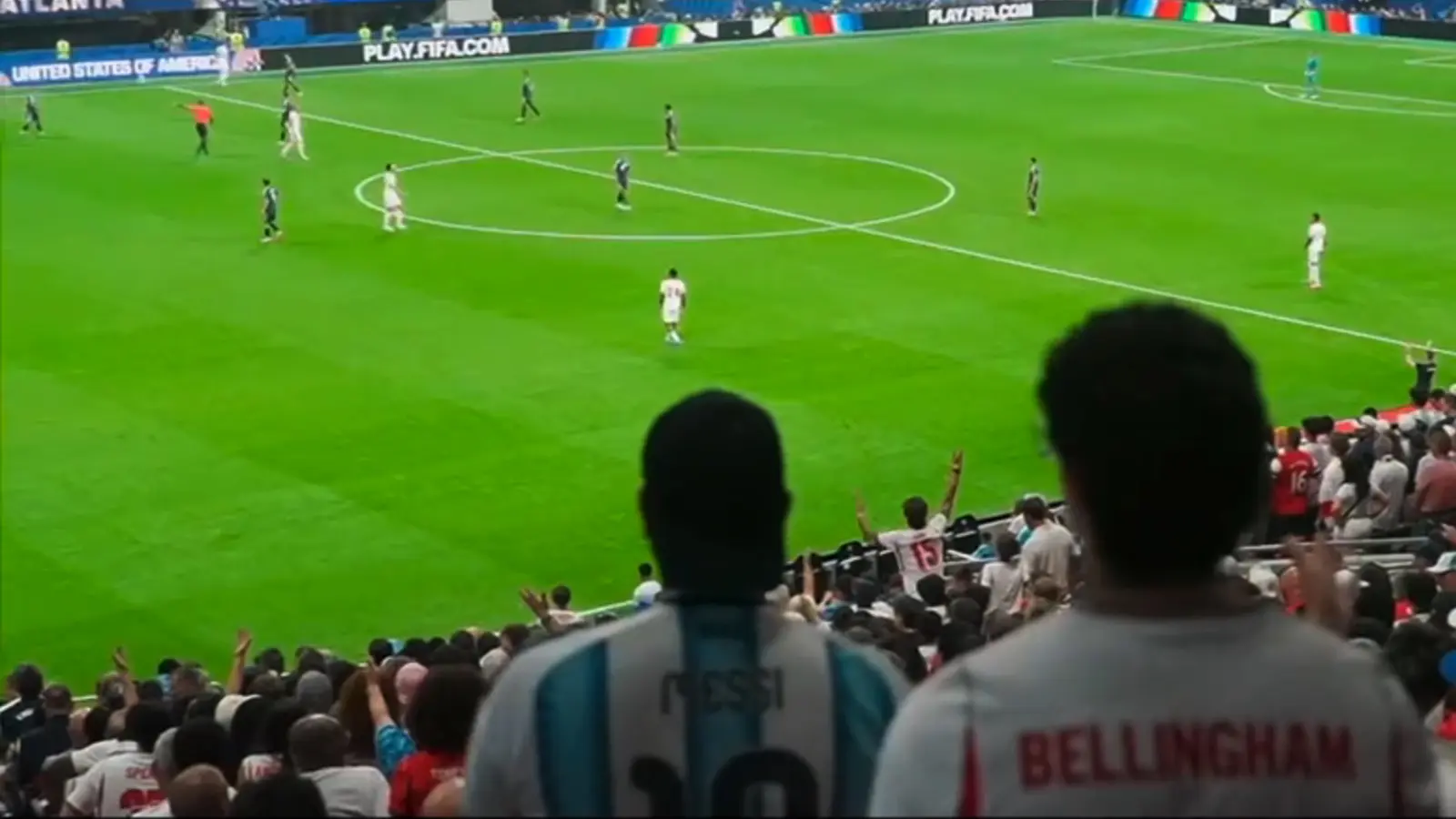
The editors cut to ordinary people in the stadium who are enjoying the match, allowing viewers at home to see themselves represented. The slow-motion montages of celebration and despair following the goals are particularly dramatic and emotional.
During the half-time analysis and after the final whistle, the presenter might introduce footage of fans in public spaces (“Here was the scene in Manchester”) and live inserts of cameras and reporters outside the stadium try to capture the raw emotions of the travelling supporters.
These images create a sense of simultaneity that makes the audience at home appreciate there are millions of other people experiencing the game at the same time.
Although you will never meet Jeannette and Dougie from Manchester or any of the millions of other supporters, you shared the experience and felt part of a community. It is an imagined community because you will never know most of your fellow-members.
Of course, the scenes after the match drew attention to the geopolitical rivalry between the two nations, sparking outrage in traditional news outlets and social media.
In this way, mass culture is constantly constructing and reinforcing national identities that we assume are real.
Benedict Anderson and Imagined Communities
Benedict Anderson (1983) coined the term imagined community to describe a community whose members feel connected despite never meeting most of the other people in the group. He argued nations are imagined because they exist through shared beliefs, identities and media experiences rather than through direct personal relationships.
Anderson suggested the concept of a nation emerged as older forms of community began to lose their influence.
Religious communities were “linked by sacred languages” and “sacred texts”, such as the Bible or the Qur’an. The shared beliefs, rituals, and pilgrimages developed a great sense of belonging among the faithful, even if they lived miles apart. These communities were bound together by a common faith rather than a political border.
In dynastic systems, loyalty was directed toward the monarch with kingdoms organising their power “around a high centre”. Subjects owed their allegiance to a ruler with political authority often established by a divine right.
However, the rise of print-capitalism, especially the newspaper, enabled “people to think about themselves, and to relate themselves to others, in profoundly new ways”.
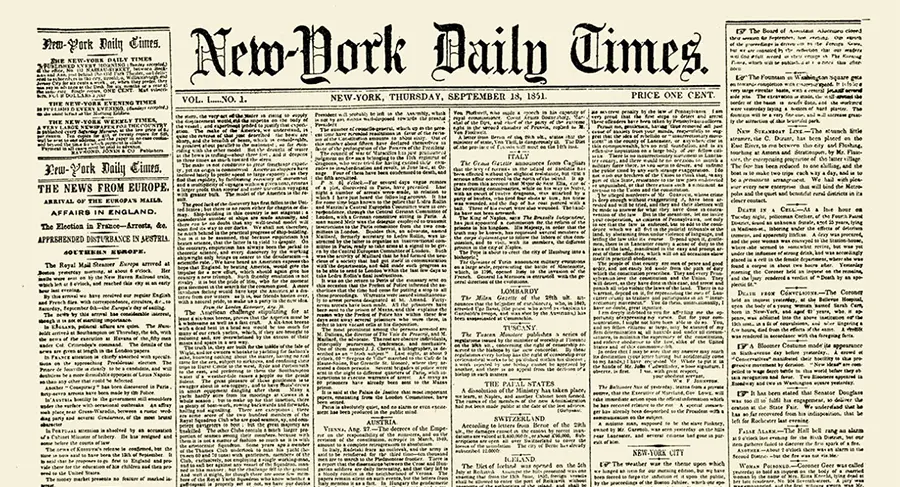
Newspaper readers could imagine being members of linguistic and cultural communities rather than purely religious or dynastic ones. Readers across the country never met one another, but they consumed the same stories, news, and cultural symbols, creating a shared sense of belonging to a national identity.
The Nation
The nation is “an imagined political community”. It is a social construct that comes into existence when a significant number of people in a community consider themselves to form a nation.
“It is imagined because the members of the even the smallest nation will never know most of their fellow-members, meet them, or even hear of them, yet in the minds of each lives the image of their communion.”
Benedict Anderson (1983)
We often classify nationalism as a political ideology, but Anderson suggested it was more closely related to systems of beliefs such as religion.
The Newspaper
Flick through the pages of a newspaper and you will read stories about politics, elections, international conflicts, celebrity interviews and gossip, scandals, the weather, and sports results. There is no direct connection between a report on the government’s changes to the tax codes and a review of the latest blockbuster in the cinema, but the newspaper is bringing them together within a single publication and presenting them as part of shared world experienced by its readers.
Anderson argues newspapers could be considered a work of fiction because editors were creating an “imagined world” by selecting which stories should be published in each edition.
“Reading a newspaper is like reading a novel whose author has abandoned any thought of a coherent plot.”
Benedict Anderson (1983)
When the newspaper reader observes other papers being “consumed by his subway, barbershop, or residential neighbours”, the individual is “continually reassured that the imagined world is visibly rooted in everyday life”. In other words, we feel confident we belong to a community.
Digital Media
In Anderson’s model, mass media strengthened national consciousness. British newspapers helped readers imagine themselves as part of Britain and French newspapers helped create a French national identity.
The internet enables individuals to participate in communities that extend beyond national borders. The shared experiences of religious ceremonies that were replaced by newspapers have now been replaced by doomscrolling. The number of likes and shares ensures we are aware of fellow-users engaging in the daily ritual of checking the latest stories on social media.
Instead of producing nations, the digital distribution and circulation of media texts can help construct global fandoms, gaming communities, international activist movements, and other transnational identities. We still imagine these communities because we will never have personal relationships with most of the people in the group.
However, new technologies still have the power to reinforce national identities, especially during events such as The World Cup, election cycles and royal celebrations because the algorithms feed users a continuous stream of national discourse and patriotic narratives.
Audience Theories
It is worth considering motivation theories which attempt to explain why people consume media texts. For example, Abraham Maslow’s hierarchy of needs suggests we have a desire for interpersonal connections and to be part of a social network. Belonging to an imagined community satisfies that need.
David Gauntlett analysed how media representations help us construct our own identity. The shared experiences of mass culture offer the tools we need to create collective identities. Perhaps we might negotiate aspects of our expressions and behaviours to take account of the imagined community.
Final Thoughts
Anderson is not saying that nations are imaginary or fake. He is arguing they are socially imagined. People believe they belong to a community with millions of others despite never meeting them.
Since these communities are imagined, it is important we critically evaluate the impact media messages have on our values and ideologies, especially if companies involved in the cultural industries are trying to set an agenda that is harmful to the nation’s citizens.
Myths that appear natural and obvious can be imagined differently.
Bibliography
Anderson, Benedict (1983, 2006) Imagined Communities: Reflections on the Origin and Spread of Nationalism. Verso.
Stay Tuned
Curious about how audiences respond to media texts? The following articles explore how we interact and interpret the media.