OMO Advertisement
Develop your knowledge and understanding of how advertisers persuade the audience to buy the products.
Introduction
Washing powder washes clothes. It’s not exciting or glamorous, so the advertisers need to find a way to attract our attention and make the product seem desirable.
We are going to explore how they use an idealised representation of domestic life to transform OMO from a basic cleaning agent into a symbol of success and self-worth. By connecting with the audience on an emotional level and appealing to our values, we are more likely to remember the message and buy the powder.
Contents
Layout and Design
The OMO advertisement was published in Woman’s Own, a popular lifestyle magazine that featured interviews with glamorous film stars, romantic fiction, advice columns for personal problems, housekeeping guides, knitting patterns, dance routines, and other general-interest stories.
Think about the layout and design of the articles. What do you expect to see when you flick through the pages? Your attention should be grabbed by the key images and headlines, especially if the values reflect your personal identity. A kicker might add intrigue, the main text will be divided into columns to make sure the information is accessible, and important aspects of the piece will be emphasised by pull quotes.
Look again at the OMO advertisement. All the elements are carefully selected and arranged to look like the other articles in Woman’s Own, so the page feels like a natural part of the magazine experience. The advertisers are hoping you will assume the story is a real endorsement of the product rather than a paid promotion.
This technique is called native advertising.
The Advertising Standards Authority (ASA) has regulated advertising in the UK since 1962. More recently, they make sure readers are not being tricked into believing advertisements are independent content created by the writers, but this level of protection did not apply to this close study product in the 1950s.
The Housewife Stereotype
Placing the OMO advertisement in Woman’s Own makes sense because they are both targeting the same audience – hardworking housewives.
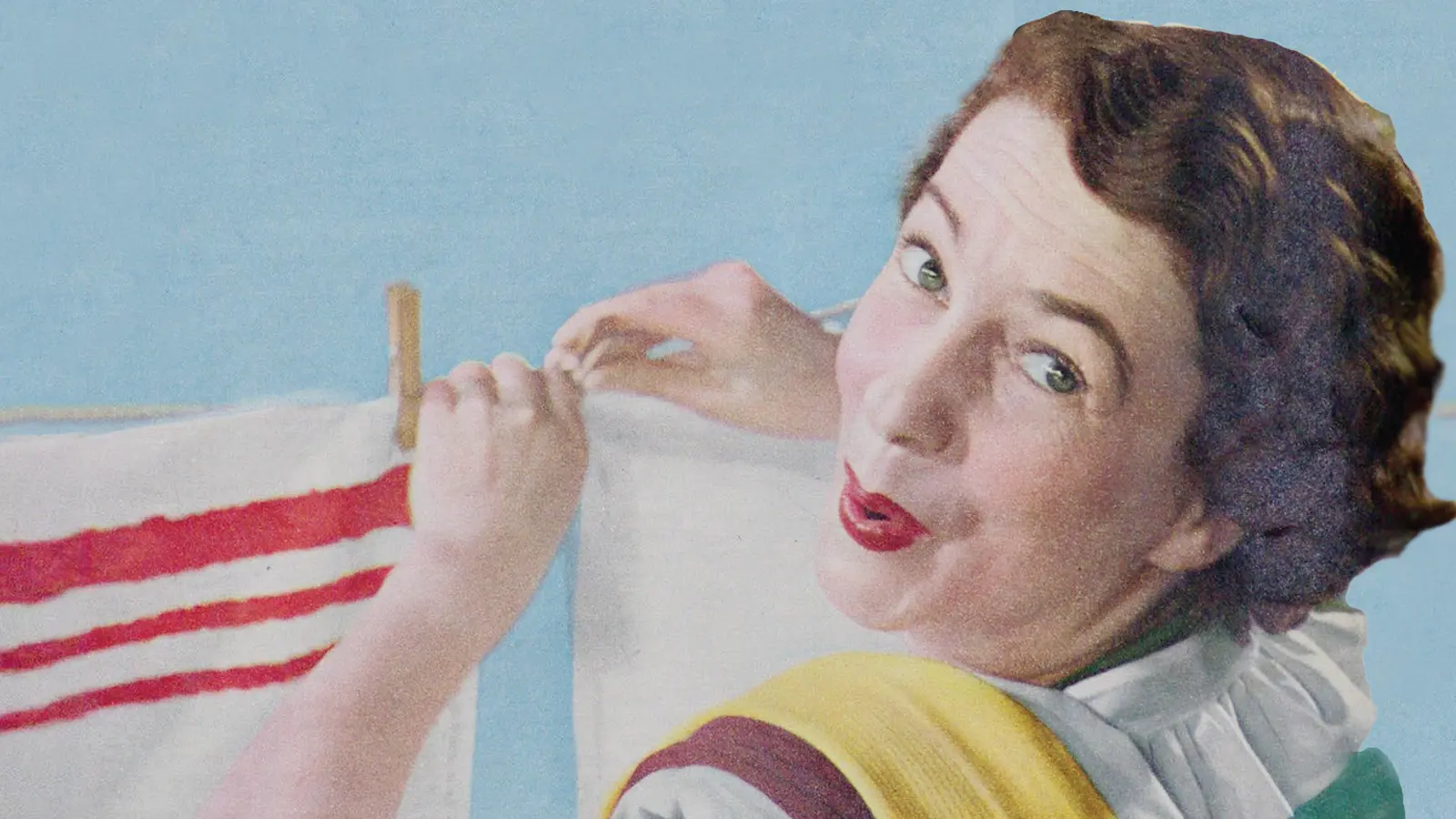
Readers will recognise their own washday routines in the main image. For example, the woman’s sleeves are rolled to her elbows, signifying the physical demands of doing the laundry, and the use of the over-the-shoulder shot suggests she doesn’t have time to stop and pose for the camera.
However, readers will also be intrigued by her facial expression. Her eyes are widened, her eyebrows raised, and she seems to be saying “ooh”. The representation is almost comical, but she is clearly impressed by the detergent.
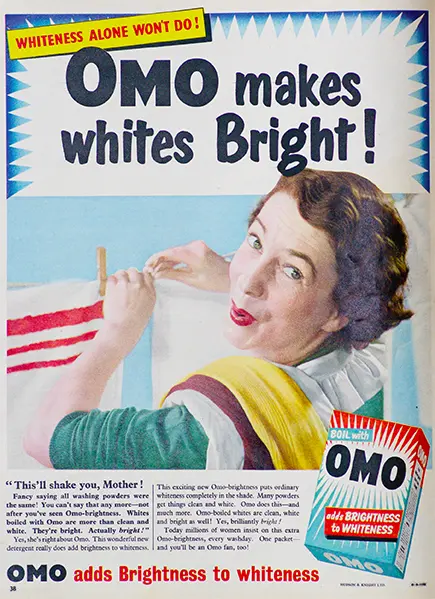
The advertisement is selling more than just washing powder. It is selling a lifestyle. The main image reassures women being a housewife is fulfilling and they should take pride in their work.
Importantly, the concept of the housewife is a social construct. It is a role invented by society.
Roland Barthes argued mass culture naturalised values and ideologies, such as the idea women should take care of the home while men go out to work. Each time you see the positive stereotype of the housewife in the media, you are positioned to accept the identity as normal and obvious. Although the advertisement reflects the reality of gender roles in 1950s Britain, the representation reinforces the myth that women should be the homemaker.
We are often made to feel guilty if we don’t fulfil society’s expectations. This is particularly true when it comes to beauty standards. Look carefully at the woman’s red lipstick, subtle makeup and neatly styled hair. The representation encourages women to look glamorous even when doing the laundry.
Some critics believe stereotypes are a form of social control. The stereotype of perfect housewife forces women into believing they need to stay at home and look pleasing for their husbands. Masculinity is absent in the OMO advertisement because men are supposed to be out conquering the world.
Social Proof
How often do you consider the opinions of other people when deciding between products on the shelves or online? Advertisers know we value the experiences of our friends and family because we don’t want to waste our money and buy the “wrong” product.
Publishing the advertisement in Woman’s Own adds to the credibility of the message because the audience already trusts the magazine.
Interestingly, the opening section features the daughter promoting the benefits of OMO. This new detergent will “shake” her mother’s washday routine. We can assume the daughter has moved into a new house and tried the OMO detergent on her own clothes. She is now sharing this wonderful discovery with her mother.
The copy ends with the statistic “millions of women insist on this extra Omo-brightness”. This popularity makes the purchasing decision feel safer because it implies the brand is the obvious choice. If you want to be a great housewife, you don’t want to miss out on the latest detergent.
This marketing technique is called social proof. The next time you are shopping online, keep an eye out for bestseller badges, customer reviews, star ratings and other user-generated content.
Mode of Address
The advertisement uses a direct mode of address to create the impression we are having a conversation with the brand. The most obvious example is the woman glancing over her shoulder to look at the camera. There is also the imperative “boil with OMO” on the packaging and the story ends with the promise “One packet – and you’ll be an OMO fan, too”. This technique makes the message feel more immediate and relevant to the audience.
The informal tone is another way the advertisement builds a relationship between the brand and the consumer. The colloquial “this’ll shake you” sounds friendly and relatable, the claim “OMO-brightness puts ordinary whiteness completely in the shade” is a clever pun, and the playful rhyming of “brightness” and “whiteness” adds some fun to the slogan. The brand is trying hard to be likeable so you will react positively to the message.
Colour Codes
The OMO advertisement repeats the word “white” six times to emphasise the product’s quality. You can also see the white sheets in the main image. Since the colour is traditionally associated with cleanliness and purity, washing clothes becomes a symbol of your moral values. If you want to be a respectable housewife and mother, you need to buy the detergent.
Companies use colours to communicate their brand identity. The OMO detergent is packaged in a red, white and blue box. There are red stripes on the sheet in the main image, the tagline and subtitle use a red font, and the top of the page has a blue border.
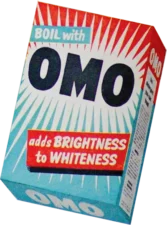
These colours encode confidence and are visually appealing, but they also allude to the British identity, epitomised by the Union Jack. Perhaps the designers are appealing to the consumers’ national pride, suggesting it is our patriotic duty to buy OMO and keep Britain “brilliantly bright”!
Unique Selling Point
Most detergents sold in shops are similarly priced and wash your clothes “clean and white”. The advertisement even draws attention to the fact consumers find it difficult to see any difference between the products: “Fancy saying all washing powders were the same!”
A unique selling point (USP) in advertising is a quality that makes a brand different from their competitors.
OMO promises consumers they will be amazed by the brightness of their clothes. They emphasise this unique selling point by including the word “brightness” six times in the advertisement. “Bright” appears five times. Notice how the “B” is capitalised in the title and slogan. Another presentational feature is the italicised adverbs in “actually bright” and “brilliantly bright”.
When you are in the shop and all the detergents are vying for your attention on the shelves, you might be persuaded to buy OMO because of its “exciting” ability to keep clothes bright.
Narrative and Character Types
Vladmir Propp defined characters in terms of their function in the narrative.
We have already discussed the social and cultural importance of washing clothes. You could argue faded colour is the villain of the advertisement because it makes housewives feel like failures. The woman is the hero who uses the magical object to defeat the villain and repair the lack. The daughter gives her mother the OMO detergent – she is the donor.
This approach to reading the advertisement might seem silly, but it does reveal how advertisers rely on stories to engage the audience. Facts and figures are not as easy to understand as a simple narrative with a positive outcome, so advertisers manipulate consumers into believing they need to achieve a wonderful resolution to their problems. You can be the hero of your narrative if you buy OMO.
Do clothes really need to be bright?
Conclusion
OMO is trying to connect with our cultural values so buying the product becomes an expression of identity. The everyday narrative of the housewife celebrates the efforts of many women in the post-war Britain, but it also transforms domestic chores into a statement of femininity and a source of happiness.
Advertisers make washing powder more than just for washing clothes.
Questions
- What does the OMO advertisement reveal about contemporary social and cultural values?
- Explain how advertisements use gender and identity to persuade consumers to buy products?
- Explain how the layout and design help communicate meaning? Answer with reference to the OMO advertisement.
- Analyse how the advertisers have constructed a positive representation of the housewife.
- Explain how advertisements use narratives to persuade consumers to buy products?
- Analyse the OMO advertisement to show how stereotypes have been used to engage the audience.
- Explain how advertisers use non-verbal codes to persuade audiences to buy the products.
- Explain how advertisers construct brand identities to position the audience to desire the products.